
Mr. K.C. Kailasam - 27 Oct 2026
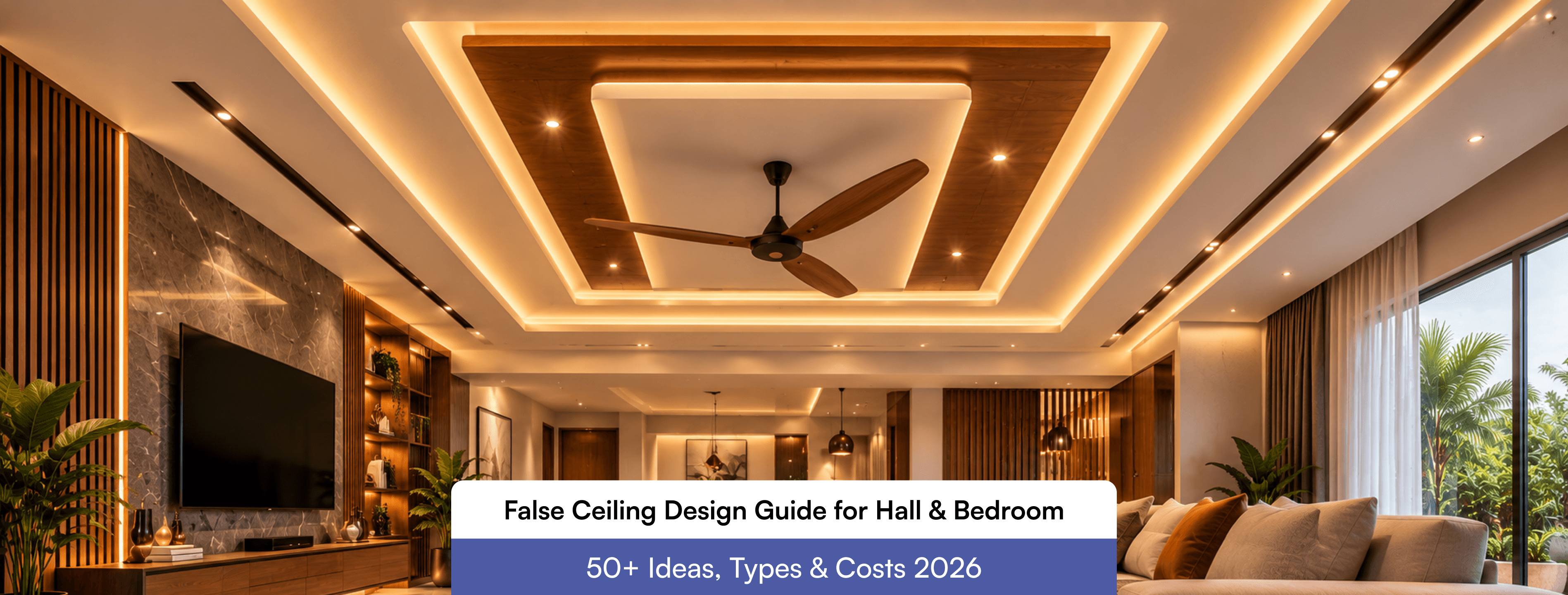
A false ceiling is one of the few interior upgrades that changes how a room looks, sounds, and feels all at once, and its impact goes well beyond decoration. It hides messy wiring, air-conditioning ducts, and uneven slab surfaces, creates space for layered lighting such as cove lights, spotlights, and pendants, and turns a plain concrete ceiling into a finished, polished part of the design. It can also make the space more comfortable by controlling sound and light better and giving the room a more balanced, put-together look. Whether you are planning a spacious hall that needs a bold statement or a bedroom that needs a calm, peaceful look, the right ceiling design ties the whole interior together. This guide covers the main types of false ceilings, more than 50 design ideas for halls and bedrooms, realistic cost factors to budget for, and the common planning mistakes worth avoiding before work begins, so you can make confident decisions and get a result that looks good and lasts. A false ceiling, also called a drop or suspended ceiling, is a secondary ceiling fixed below the structural slab using a metal framework. Homeowners usually choose one for four reasons: AC pipes, electrical conduits, and uneven beams disappear behind a clean surface. Recessed spotlights, cove lights, and profile lights need an empty space inside the ceiling or wall to be fitted. Tray, layered, or cove shapes define zones in open-plan living and dining areas. A lowered ceiling can reduce the volume an air conditioner must cool, and some materials add mild sound absorption. Height matters most. Standard residential slabs in Indian apartments are around 10 feet. After a false ceiling you generally want at least 8.5 to 9 feet of clear height. If your room is lower, a peripheral or cove design usually works better than a full drop. Gypsum board is a popular choice for homes in Coimbatore because it offers a smooth, paintable finish and supports curved, layered, and recessed ceiling designs. It is ideal for cove lighting, LED strips, spotlights, and concealed AC ducts. Suitable for halls, bedrooms, and dining rooms, gypsum ceilings work best in dry indoor spaces. In moisture-prone areas near bathrooms or open balconies, moisture-resistant boards are preferable, with proper ventilation and installation to help prevent damage. POP allows detailed cornices, mouldings, and decorative borders that are difficult to achieve with other materials, which is why it suits traditional and classical interiors. However, it is heavier than gypsum board, prone to hairline cracks over time, and slower to install. For these reasons it is less common in new modern designs. It still works well where ornate detailing is the main goal, provided the finishing is done by an experienced team. Wooden and plywood ceilings add natural warmth through beams, slats, or full panels, and they pair well with warm lighting. They work best as accent features, such as a slat insert over the seating zone or a panel above the bed, rather than covering an entire room. They need proper sealing against moisture and pests, and fire-safe detailing around lights is important, since heat from fixtures can be a concern. Good ventilation and quality finishing help them last. Metal and grid ceilings are durable, easy to access for servicing, and mostly used in offices and commercial spaces. They occasionally appear in industrial-style homes, where exposed, clean-lined finishes suit the theme. Their strength is practicality rather than warmth, so they are rarely used in conventional living rooms or bedrooms. Fabric and stretch ceilings give a smooth, modern look with no visible joints. Many come with built-in backlighting options, so the whole surface can glow softly, which suits bedrooms, home theatres, and feature areas. They are lightweight and can also help soften sound. The material should be installed carefully and kept away from sharp objects and high heat. Glass and mirror inserts work as accents rather than full ceilings. A small section above a dining table or in a passage can reflect light and make a compact room feel brighter and more open. Because they are heavy and reflective, they should be used sparingly and fixed securely by professionals. For a deeper comparison of premium options, see our guide to luxury false ceiling materials. Hall false ceilings can enhance both lighting and interior style. Popular options include tray ceilings with cove lighting, double-layer designs, floating panels with hidden LEDs, curved gypsum patterns, and geometric panels. Wooden slats and beam-style ceilings add warmth, while linear profile lights create a modern look. Rectangular recesses above seating and circular drops above dining areas help define living and dining zones. Two-tone finishes and indirect warm lighting create a welcoming atmosphere. For larger halls, a statement chandelier works best with a simpler surrounding ceiling to maintain visual balance. For more inspiration, explore luxury false ceiling designs Bedroom ceilings should create a calm, relaxing atmosphere with soft, low-glare lighting. Options include perimeter cove lighting, warm LED strips, rounded-corner designs, wooden accent panels, tray ceilings, and backlit headboard panels. Dimmable spotlights and hidden AC niches maintain a clean, functional look, while pastel-and-white combinations and curtain-pocket ceilings add subtle style. Textured finishes can also improve acoustic comfort, and children’s rooms can feature playful star-effect lighting. For a restful ambience, choose warm lighting around 2700K–3000K and avoid bright spotlights directly above the bed. In children’s and guest bedrooms, prioritize durable, easy-to-maintain designs. A false ceiling is only as good as its lighting plan. Layer ambient, task, and accent lighting to create a balanced effect, using cove lights for a soft glow and linear profile lights to highlight ceiling edges. Dimmers work well in bedrooms and living areas, while consistent colour temperatures, usually warm white, help maintain a cohesive atmosphere. Lighter ceilings can make rooms feel taller, whereas darker shades suit spaces with generous ceiling height. A subtle accent colour on a recessed panel or warm wood tones can add character, and fan placement should always allow safe clearance. Good ceiling design follows the principles of balance, proportion, and rhythm, as explained in our overview of the principles of interior design The ceiling should agree with the furniture, finishes, and colour palette, not compete with them. Flush ceilings, linear lights, minimal steps Layered geometric forms and cove lighting Moulded edges, wooden details, central chandelier Light colours, simple lines, natural wood accents Exposed elements, metal grids, matte finishes If you are still deciding on a direction, our guide to the seven interior design styles can help you choose before committing to a ceiling layout. Costs vary widely with material, design complexity, lighting, and the contractor’s quality of work, so treat any figure as a starting point rather than a quote. As a general planning guide for gypsum work in Tamil Nadu cities, a simple flat or peripheral ceiling costs less per square foot, while multi-layer, curved, or heavily lit designs cost noticeably more. Wooden and fabric finishes usually sit at the higher end, and PVC panels at the lower end. What actually drives the final cost: Curves, steps, and recesses add labour Board thickness, framework quality, and finish Profile lights, cove strips, and drivers are often billed separately High ceilings need scaffolding and more framework Textured or multi-colour work costs more Moving points and adding circuits for the new layout Always ask for an itemised quote that separates the ceiling structure, lighting, electrical work, and painting. That makes comparisons fair and avoids surprises. Many ceiling problems come from decisions made too late. The ceiling plan should follow the room layout, not precede it. Ducting, diffusers, and fan clearance need to be planned together. Too many recessed lights create glare and clutter. Choose moisture-resistant boards near bathrooms or leakage-prone walls. Leave discreet access panels for AC servicing and wiring checks. Use a peripheral design instead. Gypsum ceilings are easy to maintain, but small habits help. Fix roof or pipe leaks quickly, since moisture is the main cause of stains and sagging. Dust the surface gently, repaint every few years, and watch for hairline cracks at joints, which a good installer will have treated with tape and jointing compound. LED drivers should be accessible so a failed light does not require breaking the ceiling. A well-executed false ceiling depends on coordination between design, electrical, and carpentry teams. Experienced interior designers in Coimbatore can plan the ceiling alongside lighting, furniture, and HVAC, and explain trade-offs in height, cost, and maintenance before work begins. When comparing providers, ask to see completed ceiling work, confirm what the quote includes, and check who handles after-installation fixes. A simple peripheral gypsum ceiling with soft cove lighting keeps height intact and avoids a heavy look. A typical room takes a few days for framework and boards, plus time for finishing and painting. Complex designs take longer. Gypsum is generally preferred today for its cleaner finish, lighter weight, and faster installation. The best false ceiling is the one that fits your room’s height, lighting needs, and daily use, not the one with the most layers. Start with function, choose materials suited to the room, plan lighting early, and keep the design in harmony with the rest of the interior. Done well, it adds comfort, character, and long-term value to both your hall and bedroom.What a False Ceiling Does and When You Need One
Concealing services:
Lighting design:
Visual structure:
Comfort:
Types of False Ceilings
Gypsum board
POP (plaster of Paris)
Wooden and plywood ceilings
Metal and grid ceilings
Fabric and stretch ceilings
Glass and mirror inserts
Hall False Ceiling Ideas
Bedroom False Ceiling Ideas
Lighting and Colour Ideas That Pair With False Ceilings
Matching the Ceiling to Your Interior Style
Modern and minimalist:
Contemporary:
Traditional:
Scandinavian:
Industrial:
False Ceiling Cost in 2026
Design complexity:
Material grade:
Lighting:
Room size and height:
Painting and finishing:
Electrical rework:
Planning Mistakes to Avoid
Finalising the ceiling before furniture and lighting:
Ignoring AC and fan positions:
Overcrowding with spotlights:
Using moisture-prone boards in damp areas:
Skipping service access:
Lowering the ceiling in already low rooms:
Maintenance and Long-Term Care
Choosing the Right Professionals
Frequently Asked Questions
What is the best false ceiling for a small bedroom?
How long does installation take?
Which is better for a hall, gypsum or POP?
Conclusion