
Mr. K.C. Kailasam - 24 Sept 2026
If you're planning a renovation or furnishing a new home, apartment, or villa, you've probably come across the term "interior design consultation" while researching how to get started. It's often the first real step in working with an interior designer, yet many homeowners aren't sure what to expect from it, how long it takes, or what they need to prepare beforehand. This article walks through what typically happens before, during, and after an interior design consultation, so you can approach the meeting with clarity and get more value out of it. An interior design consultation is an initial meeting between a homeowner and an interior designer to discuss a potential project. Its purpose is to understand the client's requirements, lifestyle, design preferences, and budget, and to assess whether the designer and client are a good fit for the project ahead. It's not the same as receiving a finished design. Think of it as a discovery conversation, the designer gathers information, the client shares expectations, and both sides get a sense of how the project could unfold. What actually happens in a consultation can vary between designers and studios, but most follow a similar overall pattern. Before meeting a designer, it helps to have a rough sense of what you want from the space. This doesn't need to be detailed, even a general idea of your priorities, such as more storage, better lighting, or a specific interior style, gives the conversation a starting point. You don't need an exact figure, but having a general budget range in mind helps the designer suggest realistic options. Being upfront about budget early on tends to save time later, since it shapes decisions around materials, furniture, and scope. Most consultations begin with questions about how you actually live in the space, your daily routines, family size, work-from-home needs, storage habits, and maintenance preferences. These practical details matter because good space planning is built around how a home is used, not just how it looks. The designer will typically ask about the interior style you're drawn to whether that's minimal, traditional, contemporary, or something in between. If you're unsure of the terminology, showing reference images or describing spaces you like is usually enough for an experienced designer to interpret your taste. Some studios also touch on the difference between modern and contemporary interior design at this stage, since the two are often confused. For an in-person consultation, or a follow-up site visit, the designer will look at the existing layout, natural light, structural elements, and any furniture you plan to keep. Site conditions like ceiling height, window placement, or existing wiring directly influence what's feasible, so this step is rarely skipped for renovation projects. These constraints also need to stay within recognised building norms, such as the National Building Code of India, maintained by the Bureau of Indian Standards. Budget conversations happen early because they define the project scope. A designer will usually clarify what's included within a given budget range design fees, materials, furniture, and execution so expectations are aligned from the outset. Costs vary significantly by project size, material choices, and city, so a consultation is generally where these specifics get discussed rather than fixed in advance. Depending on how detailed the consultation is, there may be an initial discussion around colour palette, material selection, and finishes. This is usually a broad conversation rather than final specifications, which come later once a design concept is developed. Designers will often outline a general project timeline, covering concept development, approvals, and execution phases. Actual timelines depend on project size, approvals, and site conditions, so any figures discussed at this stage are typically indicative rather than fixed. A few things can make the consultation more productive: Rough measurements or a floor plan of the space, if available Reference images or a mood board of styles you like A general budget range Photos of the existing space, especially for renovations A list of must-haves versus nice-to-haves You don't need to have everything finalized. Designers are used to working with partial information and refining it together with you. After the consultation, most designers move into requirement gathering and concept development. This can include detailed measurements, a formal site visit, and the preparation of a design proposal outlining the design concept, estimated costs, and next steps. Some studios also prepare early 3D visualizations or mood boards to communicate the proposed direction before moving into detailed drawings and material specifications. What is included in your design fees, and what isn't? How do you handle changes once the project has started? What is your typical process from concept to execution? Who manages contractors and on-site execution? Can I see examples of past residential projects? Being clear about your lifestyle, budget, and non-negotiables tends to lead to a more focused conversation. It also helps to ask questions rather than simply listening, a consultation works best as a two-way conversation about how your needs translate into a workable design. If you're still exploring what interior design actually involves or want to understand why interior design matters for everyday living, it's worth reading up before your first meeting because it makes the consultation itself more productive. Once you have a clearer sense of your requirements, speaking with experienced interior designers in Coimbatore can help you understand how those ideas translate into a practical design plan for your home or villa. For homeowners working on larger residential projects, it can also help to understand what qualifies as good design practice, as maintained by recognised professional bodies in the field. The designer discusses your requirements, lifestyle, design preferences, budget, and the space itself, to understand the scope of the project. This varies by designer and project complexity, some are brief introductory calls, while others involve a longer in-person meeting or site visit. Rough measurements, reference images, a general budget range, and a sense of your priorities are helpful, though not mandatory. A rough budget range is useful, as it helps the designer suggest realistic options, though exact figures aren't required upfront. Ask about design fees, process, timelines, and how changes or revisions are handled during execution. It's generally considered a useful first step, since it helps establish direction, scope, and mutual expectations before any design work begins. An interior design consultation isn't just a formality, it's where the direction of your project actually takes shape. The clearer you are about your lifestyle, priorities, and budget, the more useful that first conversation becomes. From there, the process moves into measurements, concept development, and eventually execution, each step building on what's established at the consultation stage.What Is an Interior Design Consultation?
What Happens Before the Consultation?
Defining Your Requirements
Preparing Your Budget and Priorities
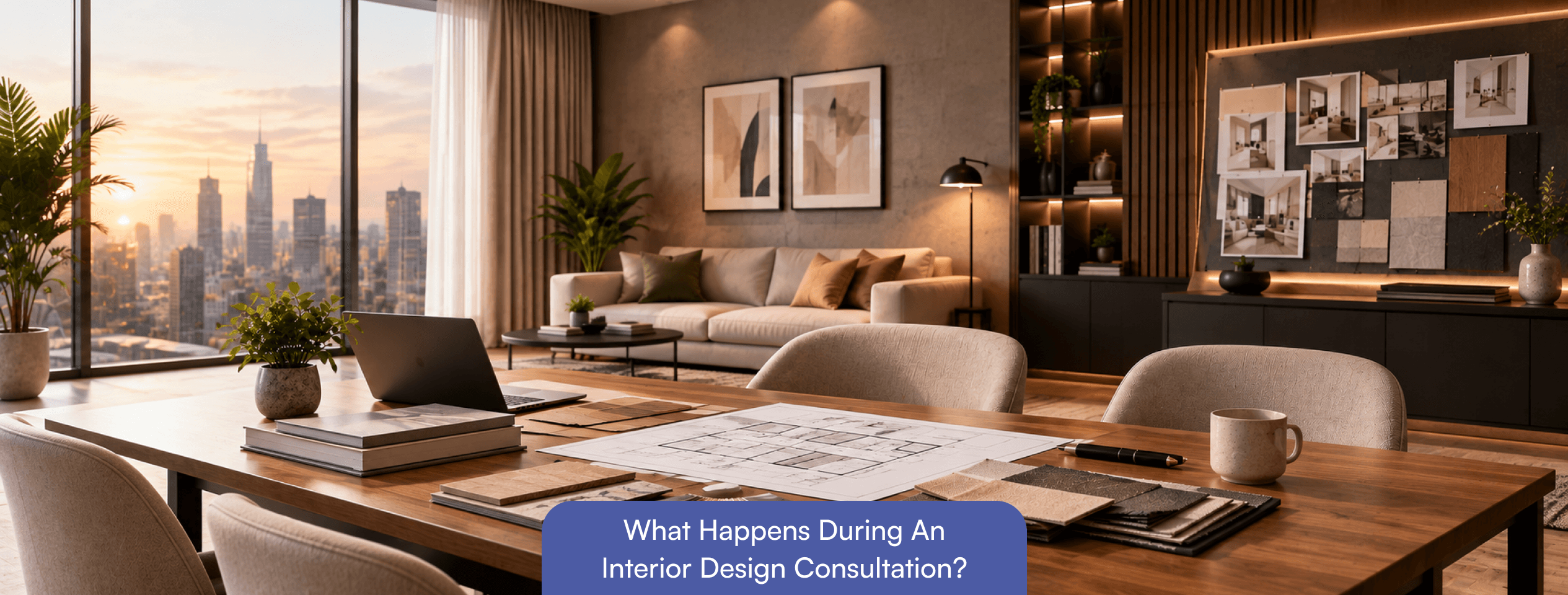
What Happens During an Interior Design Consultation?
Discussing Your Lifestyle and Needs
Understanding Your Design Preferences
Reviewing the Space
Discussing Budget and Scope
Exploring Materials, Colours and Finishes
Establishing the Project Timeline
What Should You Bring to an Interior Design Consultation?
What Happens After the Consultation?
Questions to Ask an Interior Designer During the Consultation
How to Make the Most of Your Interior Design Consultation
FAQ
What happens during an interior design consultation?
How long does an interior design consultation take?
What should I prepare before meeting an interior designer?
Should I have a budget before an interior design consultation?
What questions should I ask an interior designer?
Is an interior design consultation necessary before starting a project?
Conclusion