
Mr. K.C. Kailasam - 01 Oct 2026
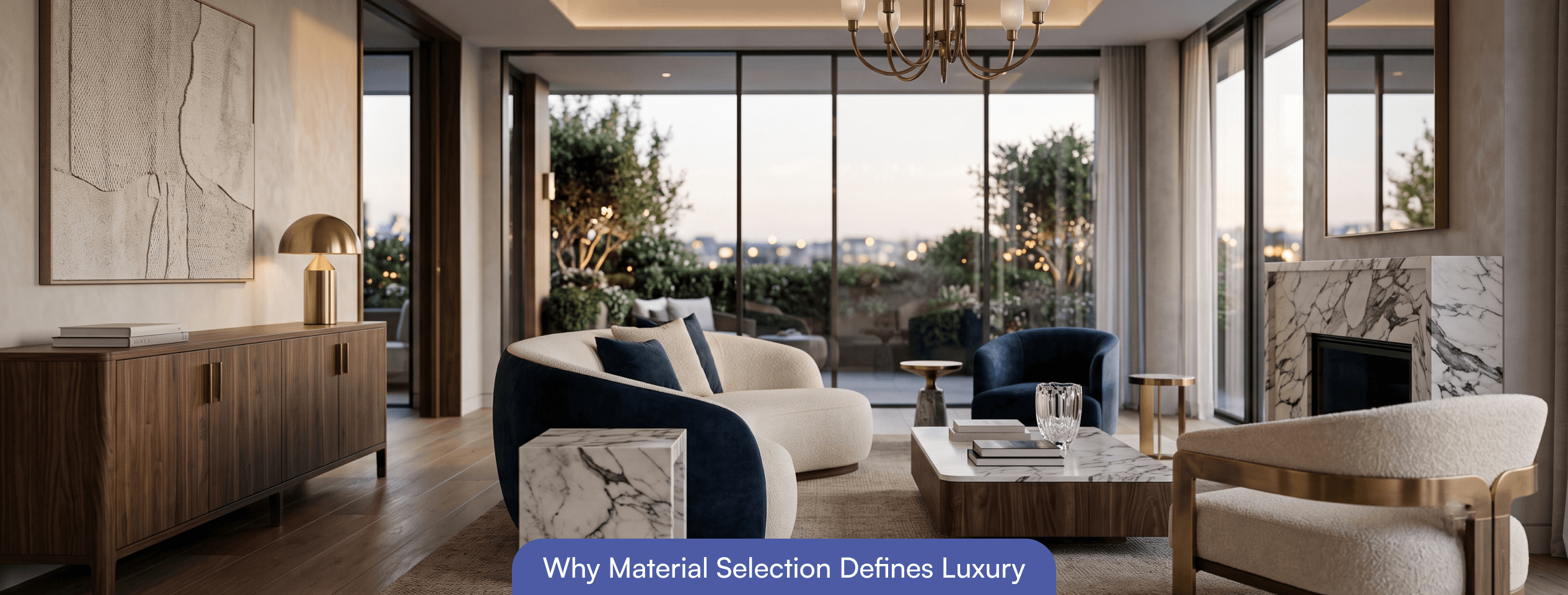
Luxury is easy to mistake for a shopping list: imported furniture, statement lighting, a dramatic chandelier. Yet in a well-designed home, what you notice first is rarely an object. It is the cool, even surface of a stone floor, the quiet close of a cabinet door, the way timber grain runs unbroken across a wall. These qualities come from material selection, and they decide whether a space feels composed or merely expensive. Luxury in materials has less to do with price than with the quality of the surface and its consistency. Texture, depth of finish and the way a material responds to light all shape perception. A honed stone absorbs light softly, while a high-gloss lacquer reflects it sharply. Neither is better, but each suits different rooms. Craftsmanship matters just as much. Precise edge detailing, matched grain, tight joinery and clean junctions between different surfaces separate a refined finish from an ordinary one. A premium material installed poorly will look less luxurious than a modest one executed with care. For a broader overview of the categories designers work with, our luxury interior materials guide is a useful starting point. Natural stone brings veining, variation and visual weight that are difficult to replicate. Marble suits living areas, feature walls and bathrooms, but it is calcium-based and porous, so acidic spills can etch the surface and it needs sealing and careful upkeep. The variety and finish you choose change both the look and the maintenance, which we cover in our guide to the best marble for luxury homes. Granite is harder and more heat-tolerant, which makes it practical for working surfaces. Porcelain slabs and engineered stone offer a more uniform pattern, useful where consistency across a large area matters more than natural variation. Solid wood and wood veneer add warmth. Veneer allows consistent grain across large panels and is often more stable than solid timber in wide applications. Metals such as brass, bronze or steel work best as fine accents, like inlays, handles and frames, where they add definition without dominating. Glass contributes transparency and reflection, while upholstery brings touch and comfort, provided the fabric suits how often and how roughly it will be used. A finish that fails in daily use cannot be called luxurious. Designers therefore weigh moisture resistance, heat tolerance, scratch and stain behaviour, and cleaning requirements against each room's demands. A powder room can carry delicate surfaces that a family kitchen cannot. Kitchens show this most clearly. Cabinet carcasses, shutter finishes, countertops, backsplashes and hardware all face heat, steam and constant cleaning, and they must still look like one considered scheme. Interior designers in Coimbatore can help homeowners coordinate these elements so that, for instance, a heat-sensitive engineered countertop is not placed beside a hob without proper protection. For wet areas, the board used beneath a laminate or veneer matters as much as the visible surface. Indian standards from the Bureau of Indian Standards cover plywood grades, so ask for the grade and specification rather than accepting a general description. Material palettes shift with design direction. Modern interiors often favour clean planes, glass and metal, while contemporary spaces tend to be softer and more fluid in their mix of textures. The distinction affects specification, and our comparison of modern vs contemporary interior design explains it in more detail. Style also guides restraint. Quiet luxury relies on muted tones and fine tactile quality, whereas industrial luxury lets metal and raw textures take a leading role, softened by refined finishing. Materials are rarely judged alone. A single stone slab can look exceptional on its own and awkward beside a wood tone with the wrong undertone. Contrast works when it is deliberate, such as a smooth stone against a textured timber, and tonal consistency keeps the overall scheme calm. Lighting changes everything. Warm light deepens wood and softens stone, while cooler light can flatten both. Testing samples under the room's actual lighting avoids surprises. This layered, low-contrast approach is central to quiet luxury interior design. Longevity is one of the more reliable measures of value. A durable, repairable surface that can be polished, resealed or refinished often serves better than a cheaper one that needs early replacement. This does not guarantee financial returns, but it does reduce waste and replacement effort. For timber, look for responsibly sourced products. Certification schemes such as the Forest Stewardship Council provide a recognised way to verify that wood comes from managed forests. Ask suppliers for certification documents instead of relying on verbal claims. Local conditions deserve real attention. Warm weather, monsoon humidity, strong afternoon sun and frequent air conditioning all affect how materials behave. Fabrics and some finishes can fade in direct sunlight, and timber panels can respond to moisture changes, so ventilation and placement matter. Lifestyle counts too. Large families, regular entertaining and daily cooking with heavy tadka and oil all argue for easier-to-clean surfaces in some areas. Because the right answer depends on the site, orientation and installation method, an on-site assessment by a designer is worth more than any general rule. Luxury interiors are built on suitable materials, handled with skill and combined with intent. Price alone does not secure that result. Considering performance, maintenance, style and light together produces a home that looks refined and stays that way. If you are planning a premium interior and want to discuss material options for your own space, you are welcome to explore the design expertise of R Space Studio. No. Price alone does not decide how a space feels. Luxury comes from choosing materials that suit the room, finishing them with precision, and combining them with consistent tone, texture and lighting. A modest material executed with careful detailing often looks better than a costly one installed poorly. It can be, if placed thoughtfully. Marble is a porous, calcium-based stone, so acidic substances like lemon juice, vinegar or tamarind can etch the surface. It works well for living room floors, feature walls and bathroom vanities. For a busy kitchen counter, many homeowners prefer granite, porcelain or engineered stone, or accept that marble needs regular sealing and care. Veneer is a thin layer of real wood bonded to a base board. It gives consistent grain across large panels and is generally more dimensionally stable in wide applications such as wall cladding and wardrobes. Solid wood is better suited to furniture elements that benefit from being sanded and refinished several times over the years. Consider humidity during the monsoon, strong afternoon sun, and how often air conditioning runs. Fabrics and some finishes can fade in direct sunlight, and timber can react to moisture changes. Good ventilation, sensible placement and moisture-resistant base materials in wet areas help. Since the right choice depends on the site, ask a designer to assess the home before finalising specifications. Ask the supplier for documents rather than relying on verbal claims. For responsibly sourced timber, request certification such as FSC. For plywood, ask for the grade and the relevant Bureau of Indian Standards specification. Verify these against the issuing body's official records before you commit.What Makes a Material Feel Luxurious?
How Different Materials Shape Luxury Interiors
Stone, Marble and Engineered Surfaces
Wood, Metal, Glass and Fabric
Material Selection and Functional Performance
Materials and Interior Design Styles
Why Material Combinations Matter
Sustainability and Long-Term Value
Choosing Materials for Luxury Homes in Coimbatore
Conclusion
Frequently Asked Questions
Does an expensive material always make an interior feel luxurious?
Is marble a practical choice for everyday use at home?
What is the difference between wood veneer and solid wood?
How should I choose interior materials for Coimbatore's climate?
How can I check whether timber or plywood is responsibly sourced and of the right grade?