
Mr. K.C. Kailasam - 19 Sept 2026
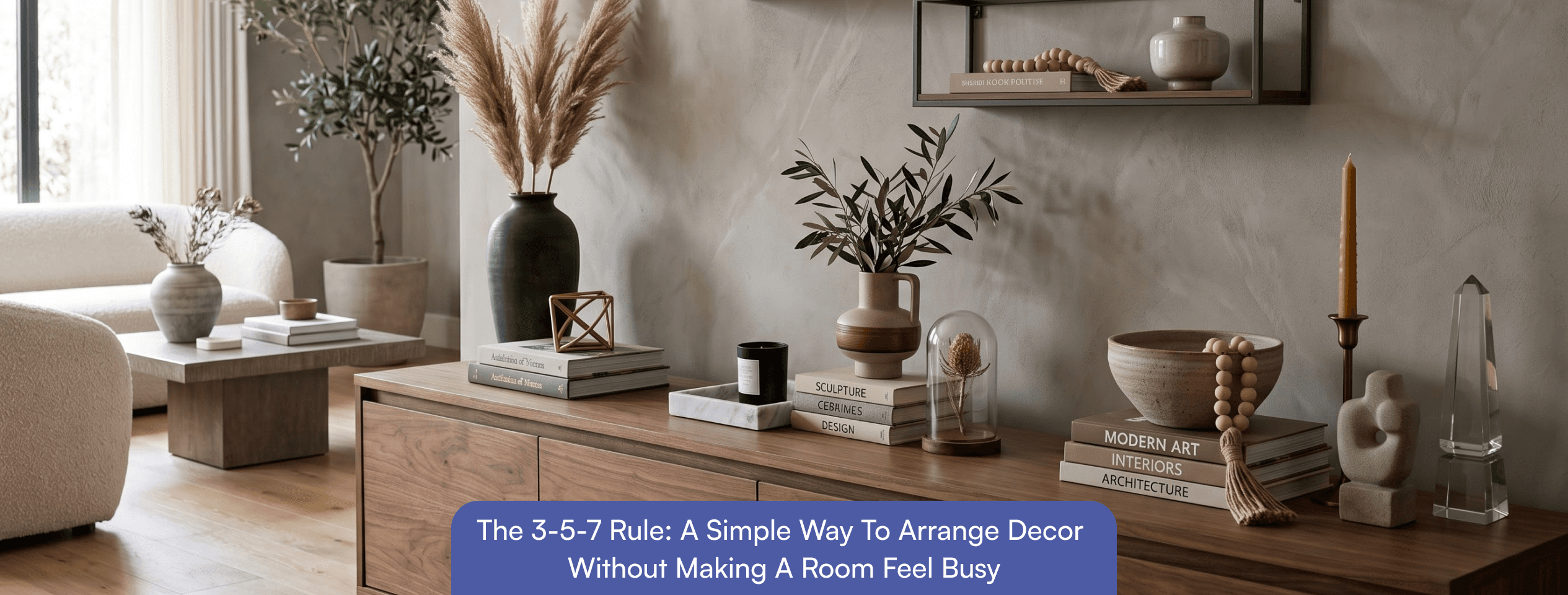
You bring home a brass vase, then a planter, then two framed prints, and suddenly the shelf looks crowded instead of styled. Most homes we see in Coimbatore have this exact problem: lovely pieces, but no clear arrangement. The 3-5-7 rule in interior design is a simple fix. It works whether you hire one of the interior designers in Coimbatore or rearrange things yourself this weekend. The 3-5-7 rule in interior design is a decor guideline that groups accessories in odd numbers: three, five, or seven items. Odd groupings look more natural and balanced than even pairs, and they guide the eye across a surface without making it look crowded or staged. Think of it as a starting point, not a strict law. Plenty of good rooms break it on purpose. Still, it removes a lot of guesswork, especially when you are staring at an empty console. You may also hear it called the 3 5 7 decor rule or the rule of odds in decorating. Even numbers split into pairs. Two identical vases side by side read as a mirror image, which feels formal and static. Odd numbers can't split evenly, so one item naturally becomes the focal point. That small imbalance keeps the eye moving. It travels from the tallest piece to the shorter ones and back, which feels relaxed instead of rigid. Designers call this asymmetrical balance: the arrangement feels even overall without copying itself on each side. A group of three or five also reads as one composed moment, so the rest of the surface can stay calm. This is a design habit rather than a scientific law, and results vary with your room and taste. Match the number to the size of the surface: Then follow four quick steps: Choose a focal point, usually the tallest or boldest piece. Vary heights, something tall, something medium, something low. Repeat one colour or material, such as brass or teak, to tie the group together. Step back. If it feels busy, remove one item. Try a wooden tray holding a candle and a brass bowl, a small stack of two books, and a low planter. That's three visual units, not six loose objects. For more practical layouts, see our interior design ideas for Indian homes. A brass diya, a small planter, and a stack of two books on a teak console make a textbook group of three. We often see Coimbatore consoles lined with six or eight small souvenirs; trimming to three usually calms the whole entry. If you own a Thanjavur painting or a bronze lamp, make it the focal point. Our guide to Indian regional interior styles explains how these pieces sit in a modern home. To style shelves with the 3-5-7 rule, group items in odd clusters per shelf rather than across the whole unit. Use three on a narrow shelf, five or seven on wider ones, and leave a few inches of empty space between clusters. On a bedside table, a lamp, a book, and a small plant is plenty. On a dining table, keep the centrepiece low, perhaps a runner with three items, so people can see each other across the meal. The most common slip is treating the numbers as a strict count. If a room feels crowded at seven items, use five. We also see people matching everything so nothing stands out, and keeping every item the same height. Pair the rule with negative space, leave breathing room around each group. Check scale and proportion too. A tiny vase on a large sideboard disappears, while an oversized one overwhelms a small table. Layering textures, such as ceramic beside wood and brass, adds interest without adding more objects. Lighting matters as well. The Bureau of Energy Efficiency shares guidance on efficient lighting, and for lamps or other electrical decor, look for BIS certification where applicable. Keep windows and vents clear of tall decor, in line with the lighting and ventilation guidance in the National Building Code of India 2016. The 3-5-7 rule handles surfaces. It can't fix furniture that's too big, poor lighting, or a layout that doesn't flow. If every arrangement still feels off, or you're planning a larger makeover, a home interior designer in Coimbatore can look at the whole room, from furniture scale to lighting and storage. Odd groupings give you a quick, dependable way to style a table, shelf, or mantel without crowding it. Start with three, choose a focal point, vary the heights, and fix until the surface has room to breathe. Treat the numbers as a guide, not a rule to obey. It's a styling guideline that suggests grouping decor items in threes, fives, or sevens. Odd numbers create a focal point and a natural rhythm, so arrangements look intentional rather than rigid. Use three for small surfaces, five for medium ones, and seven for large shelves or mantels. Treat it as a starting point, not a strict law. Not always. It works best on surfaces where you display objects, such as coffee tables, consoles, shelves, and bedside tables. In small rooms or minimalist spaces, a single statement piece can look better than a group. Use the rule as a guide, then trust your eye and how the space is used. Yes. Brass lamps, bronze figurines, Thanjavur paintings, and wooden accents all suit odd groupings. Choose one traditional piece as the focal point and support it with simpler items in a similar tone. This keeps heritage pieces visible without crowding them, which suits both modern and traditional Indian homes.What Is the 3-5-7 Rule in Interior Design?
Why Odd Numbers Work for Decor Grouping
How to Apply 3, 5, and 7 in Every Room
Living Room Coffee Table
Console Table and Entryway
Shelves and Mantels
Bedside and Dining Tables
Common Mistakes and Pairing the Rule with Other Principles
When to Bring in a Professional
Make the 3-5-7 Rule in Interior Design Work for Your Home
FAQs
What is the 3-5-7 rule in decorating?
Does the rule of odds apply to every room?
Can I use the 3-5-7 rule with traditional Indian decor?