
Mr. K.C. Kailasam - 13 Oct 2026
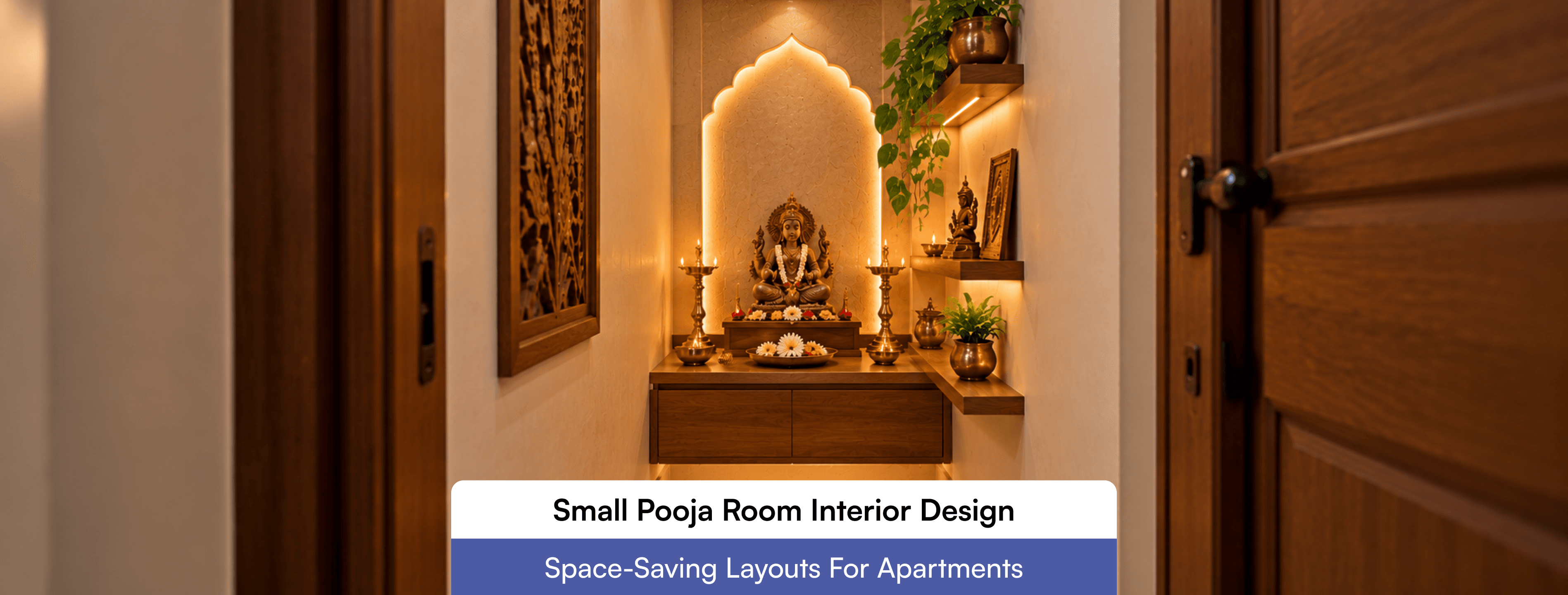
In Indian homes, the pooja room is a sanctuary of peace and prayer. In an apartment, though, it often has to share a wall with the TV unit or squeeze in beside the kitchen. The good news is that a pooja area does not need a full room to feel complete. It needs a clear sense of order, the right light, and a few well-planned details. This guide explains how to plan a small pooja room in an apartment so it feels calm, stays safe, and does not eat into the rest of your home. Before choosing a design, it helps to list what your daily practice actually involves. A family that lights a single diya each morning has very different needs from one that performs longer rituals, keeps several idols, or hosts festival prayers. Most small pooja spaces need to handle the following: A stable platform for idols or frames, at a comfortable viewing height Storage for lamps, incense, oil, matchboxes, books, and cloth A safe zone for a flame, away from curtains and loose fabric Floor or seating room for one to three people Gentle lighting that does not feel harsh Some airflow, so smoke and fragrance do not linger When you start from these needs instead of a catalogue photo, the layout almost decides itself. Our guide on space planning before furniture selection explains why this order matters for every room, and the pooja area is no exception. Location is the biggest decision, because it shapes everything else. In a compact apartment, the usual options are: The living room wall: The most common choice. It is easy to reach and works well when the unit is designed to look like part of the wall panelling. A corner of the dining area: Good when floor space is limited, since a corner unit uses an area that is often wasted. A wall niche: If your builder left a recess or you are open to a modest civil change, a niche gives you depth without taking floor area. A passage or foyer wall: Works when the space is wide enough that people can still walk past comfortably. Many families also consider direction. Traditional Vastu guidance often prefers the north-east for a pooja space, and some households follow this closely. In an apartment, the floor plan may not allow it. It is worth discussing your preference openly with your designer, so the layout respects your beliefs while still working with the structure you have. Two practical points apply in every case. Avoid placing the pooja unit against a wall that shares a bathroom, as moisture and daily use patterns can make the space feel awkward. Also keep it away from the main kitchen stove wall, where heat and cooking smoke reach it. A wall-mounted unit keeps the floor clear, which makes a small apartment feel larger. A shallow shelf holds the idols, with a drawer or small cabinet below for lamps, incense, and books. Leaving the floor open also gives you room to sit, and it makes cleaning far easier. Corners are often unused, so a triangular or L-shaped unit can add a dedicated prayer area with almost no loss of usable space. Angled shelves can display idols well, and a backlit panel gives the corner a natural focal point. Some families prefer to close the space away when it is not in use, especially in an open living area. A cabinet with louvred, jaali, or solid doors lets you keep the pooja unit private during the day and open it for prayer. Jaali designs also allow air to move, which helps if you burn incense. A niche set into a wall can feel intimate and traditional. If the wall allows it, a recess a few inches deep can hold a lit backdrop and a shelf without adding bulk to the room. Always confirm with your builder or structural consultant before cutting into any wall, since some walls carry load or hold pipes and wiring. For very small flats, a pooja unit that tucks behind a panel or sliding door in the living room wall is a clever option. It stays hidden among the wall design and opens only when needed. This works best when the unit is built into the carpentry from the start. For more small-home planning ideas, see our post on interior design ideas for a small house. The table below gives common planning ranges used in compact apartment layouts. They are practical starting points, not fixed rules, and your final sizes should be adjusted to your idols, your family size, and your ceiling height. If anyone in the family has trouble sitting on the floor, a slightly higher shelf and a small stool or fixed seat can make daily prayer far more comfortable. A pooja unit has an unusual job. It sits in a living space but also deals with open flame, oil, camphor, and smoke. Material choice matters more here than in an ordinary shelf unit. Stone for the base: A marble or granite slab under the lamp area resists heat and stains, and it is easy to wipe clean. Solid or well-finished engineered wood: Wood gives warmth and a traditional feel, but the finish should tolerate heat. Keep wood a safe distance from the flame. Laminates and veneers: These look good, but avoid them directly around the lamp, since heat can cause peeling over time. Brass and metal accents: Practical for lamp trays and doors, and they suit the traditional look. For the broader idea that materials shape both the look and the long-term life of a space, read our piece on why material selection defines luxury. On safety, keep curtains, dupattas, and loose cloth well away from the lamp. Place the flame on a stone or metal tray, never directly on a wooden surface. Where possible, electric or LED lamps are a safer daily alternative in cramped corners. Electrical wiring for backlighting should be concealed and properly insulated. For official guidance on electrical and fire safety in buildings, the Bureau of Indian Standards publishes the national standards that qualified professionals follow. Light sets the mood of a prayer space. Harsh white light can make a small unit feel clinical, while warm light makes it feel peaceful. Use warm LED strips or concealed spotlights to highlight the idols without glare. Add a soft backlit panel, such as a carved jaali or a translucent stone-effect sheet, for a gentle glow. Avoid placing bright downlights directly overhead, which can cast shadows on the idols’ faces. Ventilation is just as important. Incense and lamp smoke can build up in a closed apartment, so place the pooja unit where there is at least some air movement. If your unit has doors, consider jaali or perforated panels. A nearby window or a ceiling fan can also help clear the air without disturbing the flame, as long as the breeze is not strong enough to blow it around. Clutter breaks the quiet feeling of a pooja area faster than anything else. Because the unit is small, built-in storage does most of the work. A slim drawer for incense, matchboxes, and wicks A closed cabinet below for oil bottles, extra lamps, and festival items A narrow shelf or pull-out for prayer books and a bell A small hook or rod for cloth and garlands Keeping festival decorations and rarely used items in separate boxes elsewhere in the house stops the main unit from becoming crowded. The result is a space that feels deliberate rather than overloaded. A pooja unit looks simple, but good results come from a clear process. List what you will keep there: Idols, frames, lamps, books, and anything you use daily. Measure the available wall and floor area: Include ceiling height and any switches, vents, or beams. Choose the position: Consider your beliefs, your family’s daily movement, and how the unit will look from the main room. Decide on the style: Closed cabinet, open shelf, niche, or hidden unit. Plan the electricals early: Lighting points and wiring should be marked before carpentry begins. Choose materials and finishes: Match them to heat exposure and the rest of your interiors. Review the design before execution: Check the proportions, storage, and safety distances on drawings or a mockup. Execution quality matters as much as the idea itself. How a design moves from drawings to a finished site is covered in interior design execution explained, and a real example of that journey appears in From Vision to Reality. Many families avoid it for personal or traditional reasons, but in a small flat it is sometimes the only option. If you choose a bedroom, a closed cabinet or a hidden unit keeps the space respectful and separate. Some homes do this, but it can feel cramped and poorly ventilated. If you use this spot, make sure there is enough headroom, good lighting, and a way for smoke to clear. It depends on the number of idols and how many people pray together. A unit around two to three feet wide suits most compact apartments, as the table above shows. Yes, many families do, especially in tight spaces or homes with children and elders. Some families use both, lighting a diya during prayer and keeping an LED lamp for the rest of the day. You do not always need one, but a designer helps with proportions, wiring, material choice, and making the unit blend with the rest of the home. Since every wall and apartment is different, a plan made for your space usually avoids costly changes later. A small pooja room works best when it is planned around how you actually pray, not how much space is left over. Choose a calm location, use a layout that fits the room, pick heat-safe materials, and keep storage tidy and close at hand. Lighting and airflow then finish the job, making the corner feel peaceful rather than crowded. If you would like help designing a pooja space that fits your apartment and your daily routine, you can speak with one of the trusted interior designers in Coimbatore at R Space. Our home interior design service covers planning, material selection, and execution, so the finished space feels personal and works well for years. For a wider view of how all rooms fit together, our complete guide to interior design is a useful next read.What a Small Pooja Space Really Needs
Choosing the Right Spot in an Apartment
Space-Saving Layout Ideas That Work
Wall-Mounted Pooja Unit
Corner Pooja Unit
Pooja Cabinet With Doors
Niche or Recessed Pooja Space
Fold-Down or Hidden Pooja Units
Quick Reference: Typical Working Dimensions
Materials, Heat, and Fire Safety
Lighting, Ventilation, and Atmosphere
Storage That Keeps the Space Calm
Planning Your Layout Step by Step
FAQs
Can a pooja unit go in a bedroom?
Is it fine to place a pooja unit under a staircase?
What is the best size for a small pooja unit?
Can I use an electric lamp instead of a diya?
Do I need a designer for something this small?
Conclusion