
Mr. K.C. Kailasam - 15 Oct 2026
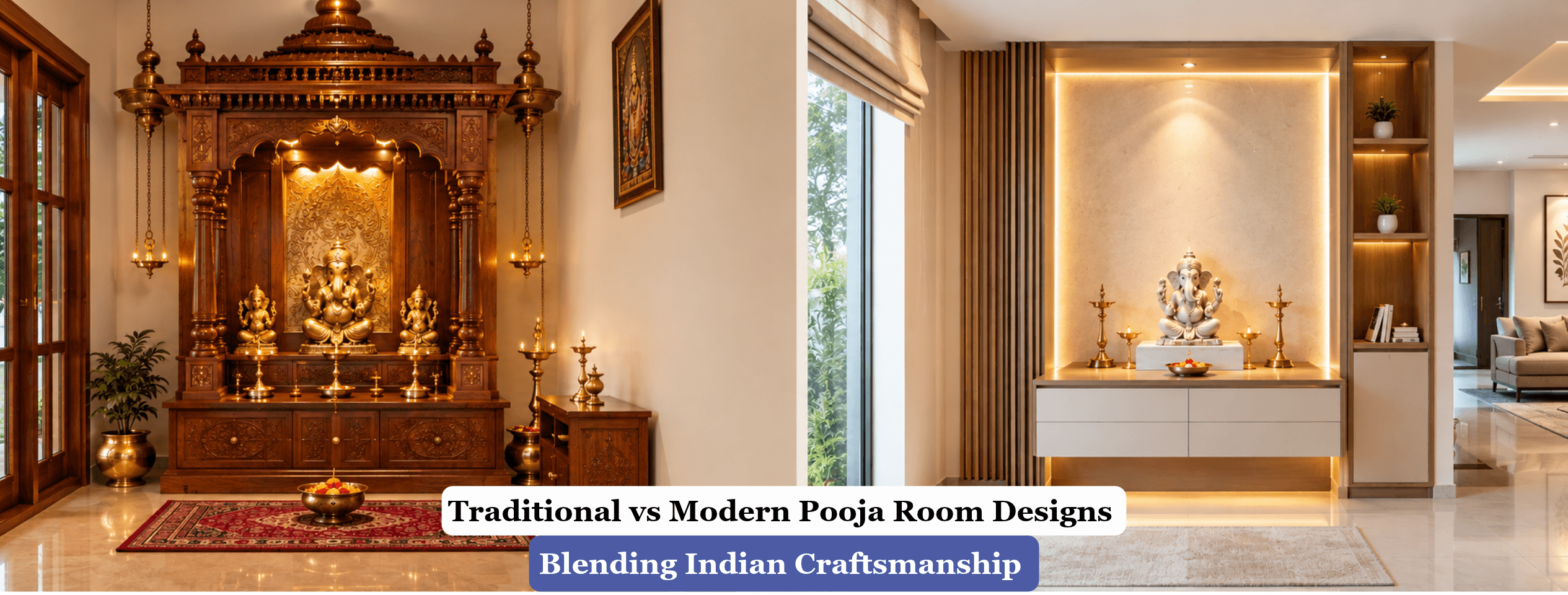
In most Indian homes, the pooja space is the quietest corner of the house. A pooja space can be anything from a traditional family heirloom to a modern, compact design, depending on the home's needs and the family's preferences. Families today are asking a fair question, should the pooja room look like the one they grew up with, or should it match the clean, minimal home around it? The answer is rarely one or the other. The best pooja rooms keep what makes a prayer space feel sacred and borrow what makes a modern home feel calm and easy to maintain. This guide explains how traditional and modern pooja designs differ, where they work well together, and how to plan one that suits your home and daily practice. A traditional pooja room draws on regional temple architecture and the household worship customs of South India and beyond. Puja is a daily act of devotion in Hindu homes, so the space is built around the ritual itself, lamps, offerings, bells, idols, and sometimes a small seating area. Common features include: Carved wood: Teak, rosewood, or similar hardwoods with hand-carved pillars, arches, and a gopuram-style crown. Brass and copper: Hanging lamps, bells, kalasams, and door fittings that age beautifully. Deep colours and textures: Warm browns, maroons, and gold accents, often with granite or marble flooring. A dedicated enclosure: A separate room or a freestanding mandir with doors, so the space can be closed when not in use. The strength of this style is emotional continuity. It looks like worship to everyone who sees it. The trade-off is scale and upkeep. Heavy carved units need generous floor space, and intricate detailing collects oil, soot, and dust faster than flat surfaces do. Modern pooja design grew out of how people actually live now. Apartments are compact, living areas are open, and many families want the prayer space to sit quietly within the interior rather than dominate it. You will usually see: Clean lines and flat panels: Slim shutters, handleless doors, and geometric jaali patterns instead of deep carving. Lighter palettes: Whites, soft greys, light woods, and a single accent of brass or deep green. Integrated placement: Wall-mounted units, niches in a TV or crockery wall, or a partition screen that separates the space without a full door. Concealed lighting: Warm LED profiles that frame the deity without visible fixtures. Engineered materials: Marine plywood, laminates, solid surface, and quartz, chosen for easy cleaning. The strength of modern design is flexibility. It fits small footprints and ties into the rest of the interior. The risk is going too minimal, where the space starts to look like a display shelf and loses its sense of reverence. A fully traditional mandir in a minimalist living room can feel like it belongs to a different house. A fully modern unit in a family that performs elaborate daily rituals can feel too thin to hold the practice. Blending avoids both problems. A good blend is built on restraint. Pick one or two traditional gestures and let the rest stay quiet. For example: A hand-carved door panel set into an otherwise plain, light-toned unit. A traditional brass lamp hung against a smooth stone or veneer backdrop. A jaali screen in a contemporary pattern that echoes a classic motif. Warm, indirect lighting that gives the glow of a lamp without relying on it. This is also where craftsmanship matters. A skilled carpenter or artisan can translate a temple motif into a simplified form that still feels authentic. Regional character can guide these choices too, and our article on Indian regional interior styles shows how local traditions can inform a modern home without turning it into a theme. Many pooja rooms disappoint because the look was chosen first and the layout second. Before picking a finish, settle the practical questions. Placement and direction Many families follow Vastu guidelines, which often favour the north-east or east of the home for the pooja space. Treat this as a family and belief-based preference to discuss early, because it affects the whole floor plan. Size and ritual needs Think about how the space is really used. Does one person pray alone, or does the whole family sit together on festival days? Do you light a full oil lamp or an incense stick? A separate room, a wall unit, and a niche each suit a different answer. Storage Pooja items multiply: extra lamps, oil, wicks, books, festival idols, and clothes. Drawers or a concealed cabinet beneath the idol platform keep the space tidy and are far easier to plan at the start than to add later. Adjacent spaces A pooja unit should not share a wall with a bathroom, and it should not sit where it is walked past constantly. If you are working with limited square footage, the ideas in our piece on small pooja room design for apartments show how to keep the space dignified without a dedicated room. Pooja rooms have needs that most other rooms do not, open flames, oil, camphor smoke, water, and flowers. Materials should be chosen with these in mind. Open flames are the main safety concern. The National Fire Protection Association recommends keeping candles and similar flames well away from anything that can burn and never leaving them unattended. The same logic applies to diyas and oil lamps: keep a clear zone around the flame, use a non-combustible base, and avoid hanging fabric or loose wooden ornaments directly above it. Ventilation matters just as much. Camphor and incense smoke need an exit, whether through a window, a vent, or a jaali panel. Without proper ventilation, soot builds up on walls and surfaces get stained more quickly, causing discolouration, lingering odours, and long-term damage to the surrounding surfaces. Material quality is also what separates a pooja unit that looks good for a year from one that holds up for a decade. The thinking in our article on why material selection defines luxury applies directly here, since a modest design in good material often outlasts an elaborate one in poor material. Light shapes the mood of a prayer space more than any single piece of furniture. Warm white lighting creates a soft, peaceful and devotional atmosphere, while cooler lighting can make the space feel harsh and clinical. Layer the lighting. Use soft ambient light for the room, a focused beam on the deity, and the live flame of the lamp as the final, symbolic light source. Keep the focused light free of glare so it does not reflect off glossy idols or glass. On colour, traditional palettes lean on deep reds, golds, and wood tones, while modern ones prefer ivory, sand, and muted greens. A blended room often does well with a quiet base and one warm, saturated accent such as a deep maroon back panel or a brass inlay. A few patterns appear again and again: Treating it as décor: Choosing a unit for how it photographs rather than how the family prays. Overcrowding: Too many idols, frames, and ornaments in a small unit make the space feel busy instead of peaceful. Ignoring storage: Loose items on the platform quickly create clutter. Poor lighting plan: Fixtures added after the carpentry is finished often look improvised. Skipping coordination: Electrical points, ventilation, and civil work need to be decided before the carpentry begins, which is why a clear interior design execution process saves so much rework. A pooja room involves carpentry, stone, lighting, electrical planning, and sometimes artisan work. Getting these trades aligned is easier when one team plans the whole picture. This is part of why many homeowners choose to work with experienced interior designers in Coimbatore rather than commissioning the mandir separately from the rest of the home. A designer can ensure the pooja unit feels like part of the house, not an add-on. For a closer look at layouts, materials, and ideas across different home sizes, you can also read our full guide to pooja room interior design. Popular modern designs include wall-mounted units with slim shutters, niches built into the living or crockery wall, and partition-style pooja corners with jaali screens. Many also use backlit panels, light wood finishes, and a single brass accent to keep the look clean but devotional. Keep the unit plain and add one or two authentic touches, such as a hand-carved door panel, a hanging brass lamp, or a jaali screen in a classic motif. A deep maroon or gold accent on the back panel also adds warmth without making the unit bulky. Ivory, white, sand, soft grey, and light wood tones create a calm base. Add one warm accent such as brass, deep green, or maroon so the space still feels sacred. Avoid too many contrasting colours, which can make a small unit look busy. Wall-mounted units, corner niches, and foldable or door-enclosed cabinets work best because they need little floor space. A closed unit with ventilated jaali doors lets you hide the pooja area when not in use while still letting smoke escape during prayer. Use warm white concealed LED strips or spotlights to softly frame the deity, and keep the light glare-free. Pair this with a hanging brass lamp or diya as the final light source, so the room feels modern but still has the glow of a traditional prayer space. Traditional and modern pooja room designs are not opposing choices. Traditional design offers depth, symbolism, and familiarity. Modern design offers clarity, efficiency, and a better fit for compact homes. The most satisfying pooja rooms take the sacred cues of the first and the practical discipline of the second, and they begin with how the family actually worships rather than with a finish or a catalogue image. If you are planning a new pooja space or reworking an existing one, start with placement, ritual needs, and materials. The style will follow far more naturally once those are right.What Defines a Traditional Pooja Room
What Modern Pooja Room Design Looks Like
Traditional vs Modern at a Glance
Why Blending Works Better Than Choosing
Planning Comes Before Style
Materials, Safety, and Maintenance
Lighting, Colour and Atmosphere
Mistakes That Make a Pooja Room Feel Wrong
Working With a Design Team
Frequently Asked Questions
1. What are some popular modern pooja room designs?
2. How can I make a modern pooja room look traditional without heavy carving?
3. What colours work best for a modern pooja room?
4. Which modern pooja room designs suit small apartments?
5. What kind of lighting is best for a modern pooja room design?
Conclusion