
Mr. K.C. Kailasam - 15 Oct 2026
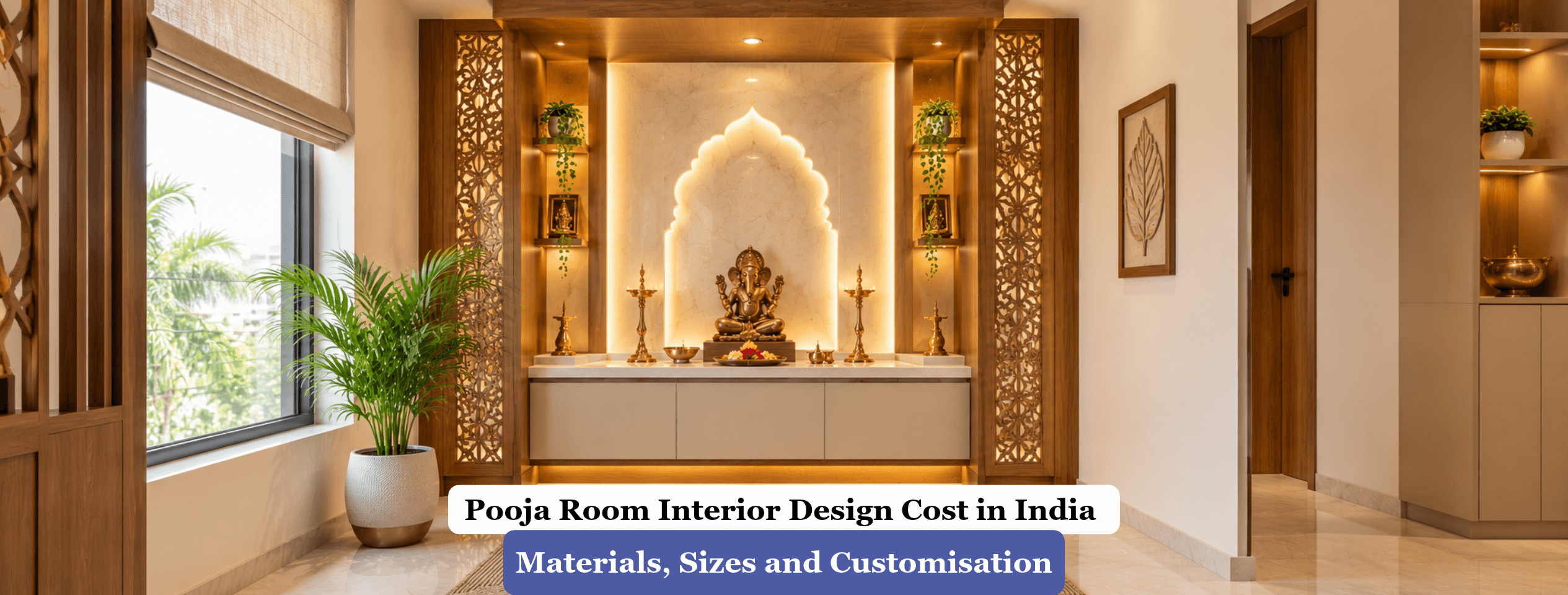
A pooja room is one of the few spaces in a home that is planned around feeling as much as function. It is where the day often begins, where festivals are observed and where families sit quietly together. That is why the question “how much will it cost?” rarely has a single answer. A compact wall-mounted mandir and a dedicated pooja room with carved doors, stone flooring and concealed lighting sit in very different budget brackets, even though both serve the same purpose. This guide explains what drives the cost, how size and material choices change the budget, and where customisation adds value. The aim is to help you set a realistic number before you speak to a designer. Five factors account for most of the price difference between one pooja room and another. Size and format: A wall unit, a corner unit, an alcove or a full room. Material: Engineered wood, solid wood, stone, metal or solid surface. Detailing: Carving, CNC jali work, inlay, brass fittings, glass or acrylic panels. Services: Lighting, electrical points, ventilation and flooring changes. Execution quality: The carpentry finish, hardware and the team installing it. Many homeowners focus only on the first two. In practice, detailing and services often decide whether a project stays on budget, which is why it helps to plan them early. The way space is allocated at the start also matters, as explained in our piece on space planning before furniture selection. The ranges below are broad planning figures based on common market practice for urban India. They are not quotations. Actual prices vary with city, material grade, finish and the complexity of the design, so treat them as a starting point for budgeting. Note: The prices mentioned above are approximate estimates for budgeting purposes only and are not exact quotations. Actual costs may vary depending on the location, material selection, design complexity, finishes, and labour charges. Two things stand out. First, the jump from a unit to a dedicated room is not just about area. A room needs doors, flooring, wall treatment, ceiling work and electrical planning, which are all separate cost lines. Second, a modest budget can still produce a dignified result if the design stays simple and the materials are chosen carefully. Size should follow how your family actually worships, not just the space available. Compact (up to 3 x 3 ft): suits apartments where a family prays briefly in the morning and evening. Idols are usually small, with one shelf for lamps and a drawer for pooja items. Medium (3 x 4 ft to 4 x 4 ft): gives room for larger idols, a bell, a lamp stand and storage, with space for one or two people to stand in front. Dedicated room (5 x 5 ft or more): allows seating, stored pooja vessels, a small platform and enough floor area for festival rituals. A useful test is to stand in the planned location and picture the full ritual, including lighting the lamp, offering flowers and stepping back. If any of those actions feels cramped, the size needs to grow or the layout needs to change. Homeowners in compact flats will find practical layouts in our guide to small pooja room interior design for apartments. Placement also influences the cost. Many families prefer the north-east or east side of the home for traditional or Vastu reasons. If that corner is awkwardly shaped or far from a ventilation source, the design may need extra work, which affects the budget. Material choice affects not only the price but also how the pooja room looks after a few years of lamps, incense and daily handling. Our article on why material selection defines luxury explores this idea in a wider context, and the same logic applies here. If you opt for plywood, it is worth checking that it carries the right grade and standard marking. The Bureau of Indian Standards publishes specifications for plywood and wood products, and you can learn more at the BIS website. One practical point on durability: pooja rooms see regular heat from lamps and smoke from incense and camphor. Materials with a good finish near the lamp area, such as stone or metal-lined shelves, tend to hold up better than bare laminate. A small design decision like this can prevent repairs later. Customisation is where a pooja room becomes personal, and also where costs can rise quickly. Some choices are worth the investment, while others are more decorative. Lighting Soft concealed lighting behind the idol or along the ceiling edge creates a calm mood without glare. Warm white tones suit most designs. Planning wiring before carpentry begins avoids visible cables and later rework. Doors and screens Carved wooden doors, jali panels or frosted glass can close the pooja area when it is not in use. This is especially helpful in open-plan homes where the mandir sits near the living room. Storage Drawers for incense, matchboxes, oil and books keep the area tidy. Built-in storage often costs less than adding furniture later and gives a cleaner look. Flooring and platform A raised platform or a stone slab beneath the idols gives the space a defined, respectful feel. Marble, granite and wood each set a different tone. Ventilation and smoke management Regular use of lamps and incense calls for airflow. A small vent, a window or a discreet exhaust helps avoid stuffy air and stains on walls. This is easy to overlook until the room is in use. Safety Keep flammable materials such as curtains and loose fabric away from open flames. Use non-combustible surfaces behind lamp stands, and keep electrical fittings away from areas where oil might spill. Regional character Families often want a pooja room that reflects their tradition, whether that is South Indian temple-style carving, Rajasthani jali work or a simple modern design. Our guide to home interior design ideas rooted in Indian regional styles shows how these influences translate into modern homes. A clear process keeps costs under control and avoids surprises. Decide the format first Choose between a unit, an alcove or a dedicated room before looking at finishes. Set a total range, then split it Allocate roughly across carpentry, stone or flooring, lighting and accessories, and leave a small buffer for adjustments. Prioritise what is hard to change later Wiring, flooring and structural carpentry are costly to redo, while accessories and décor are easy to update. Ask for a detailed quotation A good quote lists materials, thickness, finish, hardware and installation separately, so you can compare options fairly. Confirm the timeline Custom carving, stone cutting and finishing take time, and festivals can create deadlines. Working with experienced interior designers in Coimbatore helps because local teams understand material availability, craftsmen and climate conditions. Coimbatore’s warm, humid weather affects how wood and laminates age, so material advice that suits the local environment makes a real difference. A well-managed project also depends on clear coordination between design and site work, which we describe in our overview of how interior design execution works. Choosing the finish before the layout. This leads to redesign once the room’s proportions are clear. Ignoring electrical planning. Adding points after carpentry means cutting into finished work. Overcrowding a small space. A cluttered mandir looks smaller and feels less peaceful than a simple, balanced one. Using unsuitable materials near flames. Repairs and replacements add to long-term cost. Treating the pooja room separately from the home. It should feel like part of the overall design, not an afterthought. Our complete guide to interior design explains how individual rooms fit into the whole. Costs range widely. A basic wall-mounted unit can start in the tens of thousands of rupees, while a dedicated room with stone, carving and concealed lighting can cross several lakhs. Size, material and detailing are the main reasons. Ready-made units are often cheaper upfront, but custom designs fit your space, storage needs and style more precisely. In irregular or compact spaces, custom work often gives better value over time. There is no single best choice. Plywood with a good finish suits most budgets, solid wood offers longevity and stone suits flooring and lamp areas. The right mix depends on your budget and how you use the space. Yes. Wall mounted units, corner designs and foldable doors help a small flat accommodate a pooja space without crowding the room. A simple unit may take a couple of weeks, while a dedicated room with stone and detailed carpentry can take longer. Timelines depend on design approval, material sourcing and site conditions. The cost of a pooja room reflects the decisions behind it, how large it needs to be, which materials will last, and how much detailing the space deserves. A simple, well-proportioned design can feel as meaningful as an elaborate one when it suits the family using it. If you are comparing your options, our list of top home interior designers in Coimbatore can help you know what to look for, and you can see how we approach complete homes on our home interior designer in Coimbatore page. For an example of how an idea moves from concept to finished space, read how one project went from vision to reality.What Decides the Cost of a Pooja Room
Approximate Cost by Pooja Room Type
Choosing the Right Size
Materials and What They Do to the Budget
Customisation That Adds Value
How to Plan Your Budget Step by Step
Common Mistakes That Increase Cost
Frequently Asked Questions
How much does a pooja room cost in India?
Is a ready-made mandir cheaper than a custom one?
Which material is best for a pooja room?
Can a pooja room fit in a small apartment?
How long does it take to build one?
Conclusion