
Mr. K.C. Kailasam - 16 Oct 2026
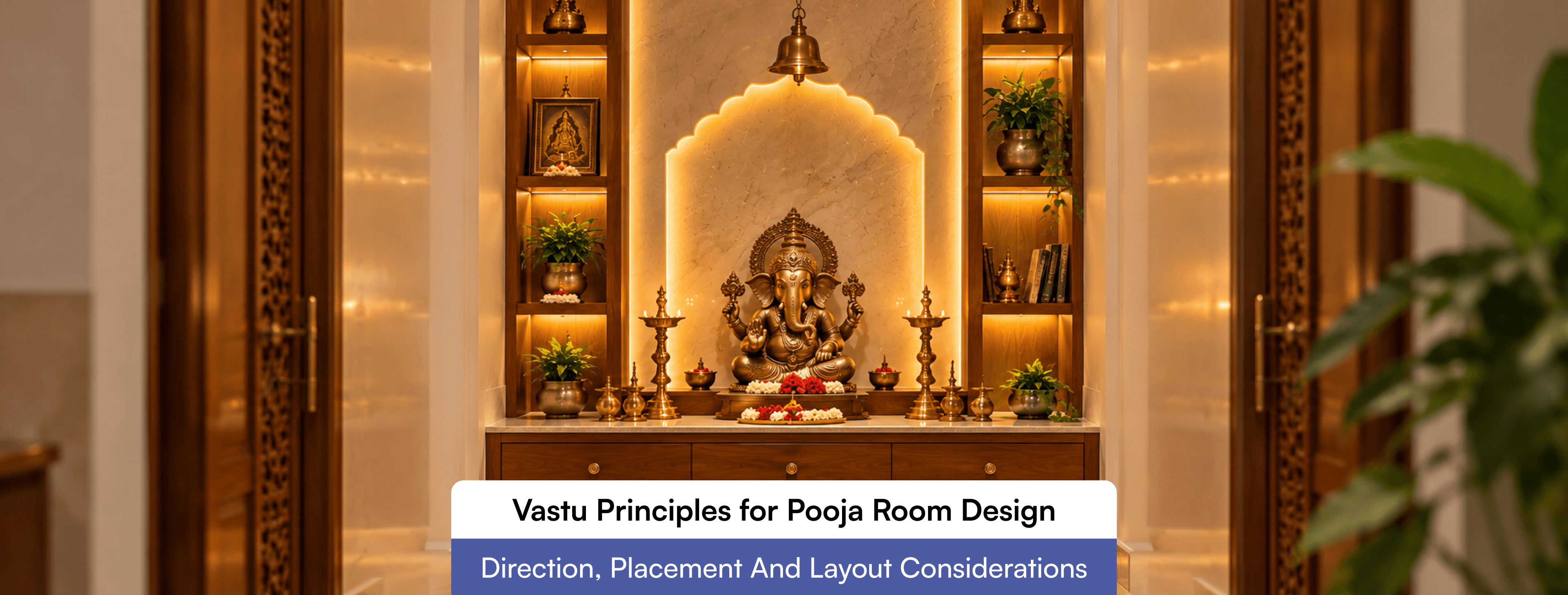
For many homes, the pooja room is the calmest corner of the house. It is where the day begins, where festivals are observed, and where families pause. Because of this, people planning a new home or renovation often ask the same question, where should the pooja room go, and how should it be laid out? Vastu Shastra, the traditional Indian system of architecture, offers detailed guidance on this. This article explains the main Vastu principles for pooja room direction, placement, and layout, and how to apply them when your floor plan doesn’t cooperate. Vastu is a traditional framework rather than a scientific standard, so treat it as a guide, balanced with the practical realities of your home. Vastu works from the idea that a home’s orientation and room placement affect the experience of living in it. Whatever you believe about the spiritual ideas behind it, many of its recommendations are practical and sensible design principles: getting morning sunlight, ensuring good airflow, choosing a quiet location, and keeping the sacred space separate from everyday functional areas. Most families come to this topic with one of three questions, which direction is best, what can be done if that direction isn’t available, and how should the room be arranged inside. The sections below answer each in turn. The most widely recommended location is the north-east corner of the home, known in Vastu as Ishanya. This zone is associated with the deity Ishana and with clarity and calm. It also receives gentle morning sunlight, which suits early prayer. If the north-east isn’t workable, the traditional order of preference is generally: East: associated with sunrise and new beginnings. North: linked to openness and prosperity. West: acceptable in many interpretations when the other directions aren’t available. The south-west and south are usually discouraged, as are rooms where the layout forces you to pray facing south. Vastu sources vary in how strictly they treat these rules, so the points here reflect the commonly accepted view. In most Vastu guidance, the worshipper should face east or north. That means idols are placed so they face west or south, with you standing opposite them. This is easy to overlook, and it’s why the direction of the room and the direction of the idol need to be planned together, not separately. Beyond direction, Vastu offers guidance on the position of the pooja room relative to other spaces. Traditional advice favors placing the pooja room on the ground floor, ideally near the entrance zone or the living area, where it’s easy to reach and feels part of the home’s heart. Directly beneath or adjacent to a staircase, since the space above would be walked on. Inside or sharing a wall with a bathroom or toilet. In a bedroom. If a bedroom is the only option, many practitioners suggest a closed cabinet or a curtain that can be drawn while sleeping. Under a beam, which creates a feeling of pressure over a space meant to feel open. In the basement or a dark, poorly ventilated corner. The common thread is separating the sacred from the utilitarian. A pooja room tucked into a quiet, clean, naturally lit zone also tends to be used more consistently. Once the room is located, the arrangement inside matters as much as the direction. Place idols so they don’t touch the wall. Leaving a small gap, traditionally a few inches, is commonly advised. Keep idols on a raised platform or mandir unit, so they sit roughly at or above the worshipper’s chest height when seated. Avoid placing idols facing each other, and avoid placing photographs of departed family members in the pooja area, as Vastu traditionally keeps these separate. Keep the collection modest. A crowded shelf makes cleaning harder and the space feels cluttered. The south-east of the pooja room is traditionally associated with fire, so it’s the usual spot for the lamp or diya. Store items such as incense, camphor, oil, and matchboxes in closed drawers or cabinets within the room, ideally on the west or south side, rather than leaving them scattered. A small vessel of water is commonly kept in the north-east of the room. Bells and sacred texts are typically kept on a clean shelf, never on the floor. Good layout means the room is usable day after day, not just aligned on paper. A few considerations stand out. Vastu generally favors a pooja room with a door on the east or north side, preferably a two-shutter wooden door. A threshold, even a low one, helps mark the space as distinct. The room doesn’t need to be large. What matters is that there is a comfortable space to sit or stand without crowding the idols. In a larger home, a dedicated room with proportions leaning toward a square or gentle rectangle feels balanced. Light-colored stone, marble, or tile is a common choice, because it’s easy to clean after daily rituals. Avoid placing a pooja room under a sloping or very low ceiling. Lamps, incense, and camphor produce smoke, so ventilation is not optional. A small window on the east or north wall, or a ventilation opening, keeps the air fresh and allows morning light in. This matters in Coimbatore’s warm climate, where an enclosed room can quickly feel stuffy. Soft whites, creams, light yellows, and pale saffron tones are traditionally preferred for their calm, bright feel. Very dark or loud colors tend to work against the atmosphere. This is the most common real-world scenario, especially in apartments where the floor plan is fixed. A rigid reading of Vastu can cause stress, so here are practical ways to approach it. Many Vastu practitioners consider facing east or north more important than the exact room location. If the north-east is occupied, the east or north is a sensible second choice. In compact homes, a well-designed mandir cabinet placed on the appropriate wall can work well. Our guide to small pooja room interior design for apartments covers space-saving options in detail. Sliding or folding doors let you close off the pooja unit when it sits in a shared living area. A reasonable adaptation that you will actually use is better than a perfect Vastu layout that disrupts how the home functions. Vastu guidance tells you where things go. Style determines how they look. A traditional home might use carved teak and brass detailing, while a contemporary apartment may prefer clean lines, backlit panels, and minimal storage. If you’re weighing these approaches, our comparison of traditional vs modern pooja room designs can help you decide, and the broader pooja room interior design guide covers materials and finishes. Regional taste also shapes the result. Many South Indian homes lean toward wooden mandaps and brass lamps, and our overview of home interior design ideas across Indian regional styles shows how these traditions can be translated into modern homes. On budget, the cost of a pooja room depends mostly on size, materials, and customization, not on Vastu compliance itself. Our breakdown of pooja room interior design cost in India explains what drives the price so you can plan realistically. A well-planned pooja room is also a safe one. Since open flames are involved, a few practical points are worth building into the design: Use non-combustible or fire-resistant materials near the lamp area, and keep curtains, fabrics, and decorative paper away from it. Position the lamp on a stable, heat-resistant surface with enough clearance above it. Plan electrical points carefully if you want LED lighting or a diya-style lamp, and keep wiring concealed and away from oil and water. Choose finishes that clean easily, since ghee, oil, and soot are part of regular use. Good design thinking at this stage matters more than people expect, a point we explore in why interior design matters for everyday living. The north-east (Ishanya) is considered the most auspicious, followed by the east and north. These directions receive gentle morning light and are associated with calm and positivity. Idols are usually placed so that the person praying faces east or north. This means the idols face west or south. Keep the idols a few inches away from the wall so air and energy can move freely around them. Vastu advises against placing a pooja room under or beside a staircase, sharing a wall with a bathroom, under a beam, in a basement, or in a bedroom. The common idea is to keep the sacred space away from areas that are walked over, damp, or used for everyday needs. If a bedroom is the only option, use a closed cabinet or a curtain. Soft whites, creams, light yellows, and pale saffron shades are traditionally preferred because they create a calm and bright atmosphere. Very dark or loud colors are usually avoided. A pooja room designed around Vastu comes down to a few ideas, a calm location, a sensible direction, proper idol placement, good ventilation, and clean, uncluttered storage. The north-east and east are the ideal starting points, but a practical, well-built space that your family genuinely uses matters more than strict adherence to every rule. If you’re planning a new home or renovating an existing one, working with experienced interior designers in Coimbatore can help you balance Vastu preferences with your floor plan, budget, and style. A good designer can adapt traditional principles to the home you actually have, so the pooja room feels natural, functional, and peaceful from day one.Why Vastu Matters in Pooja Room Planning
Best Direction for a Pooja Room
Which Way Should You Face While Praying?
Choosing the Right Floor and Location in the Home
Ground floor is preferred
Avoid these locations:
Placement of Idols, Lamps and Accessories
Idols and Images
Lamps, Incense and Storage
Water and Bells
Layout Considerations That Support Vastu
Doors and entry
Size and proportion
Flooring and ceiling
Windows and ventilation
Colors
What If Your Home Doesn’t Follow the Ideal Vastu Layout?
Prioritize the worshipper’s facing direction
Choose the best available zone
Use a wall-mounted or freestanding unit
Add enclosure thoughtfully
Seek a design-led compromise
Blending Vastu with Design Style and Budget
Safety and Maintenance Considerations
FAQs
Which direction is best for a pooja room as per Vastu?
Which direction should the God idols face in a pooja room?
Where should you not build a pooja room in a house?
What colors are best for a pooja room?
Conclusion